
LoveLife bases its psychoeducational interventions on a model developed by Prof. Stefano Federici, who is also the President of LoveLife and Professor of General Psychology and Psychology of Disability at the University of Perugia.
This is the Existential Expressive Psychoeducational Intervention (IPEE; Federici et al., 2019). The IPEE model, integrating assumptions and techniques from Gestalt Psychotherapy and Cognitive Behavioral Therapy, focuses on the here and now of the individual’s overall condition, emphasizing the subjective value of human experience, the uniqueness of the individual, and personal responsibility as reflected in their choices. It highlights the exploration and development of life meanings, concentrating on emotional experiences and decision-making, and underscores the individual’s responsibility for their own existence.
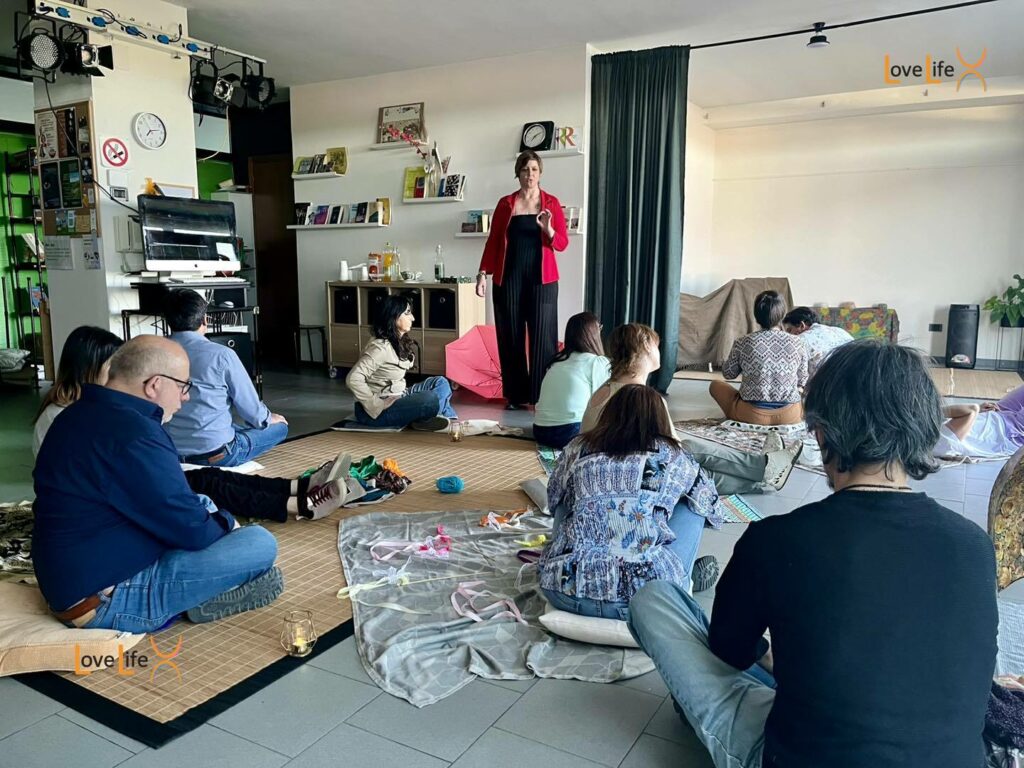
La sfida fotografica – Workshop seduzione – Spazio Qui – Perugia, 2024
Users are therefore encouraged to express their feelings openly and without restrictions, including through the use of creativity and artistic mediators.
The IPEE model also incorporates psychoeducational techniques to enhance adaptive behavior, understood as the set of skills that allow a person to respond to demands for personal autonomy and social responsibility, as well as emotional literacy and body self-esteem, understood as knowledge of one’s own body and affective and relational functions. Additionally, experiential group activities are promoted to improve verbal, paraverbal, and non-verbal communication skills, enrich emotional expression and management, strengthen interpersonal and friendship bonds, support social integration, and foster greater awareness of one’s affective and social identity.
The IPEE model is complemented by Kolb’s experiential learning cycle. The model operates through four phases, repeated as a spiral of continuous learning:
Experience – direct experience, what happened, how it felt.
Example: I used my phone after bedtime, and when the educator returned to the room and saw me, she got angry and took my phone away.Reflective Observation – reflecting on the experience just lived, observing one’s reactions and analyzing the consequences of the action.
Example: I felt bad, silly, worried; she got angry and raised her voice, took my phone, and I cried.Abstraction – developing general concepts, rules, or schemas based on previous experience and reflection.
Example: If I use the phone when I’m not allowed to, the educator will notice, get angry, take it away, and I will feel upset.Active Experimentation – putting new concepts into practice with updated behaviors, initiating a new phase of the learning cycle.
Example: Now I don’t use it after bedtime / I ask to delay bedtime by 5 minutes, but then I don’t use the phone anymore and see what happens.
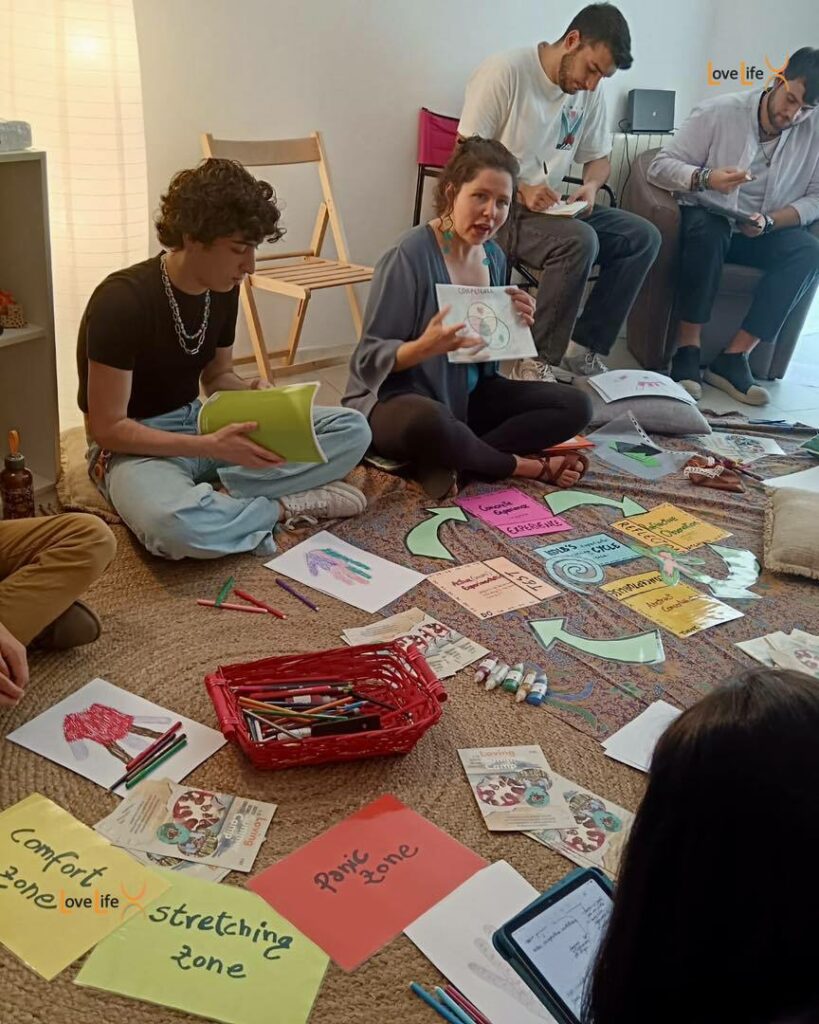
Il ciclo dell’apprendimento esperienziale – Formazione tirocinanti – Perugia, 2024
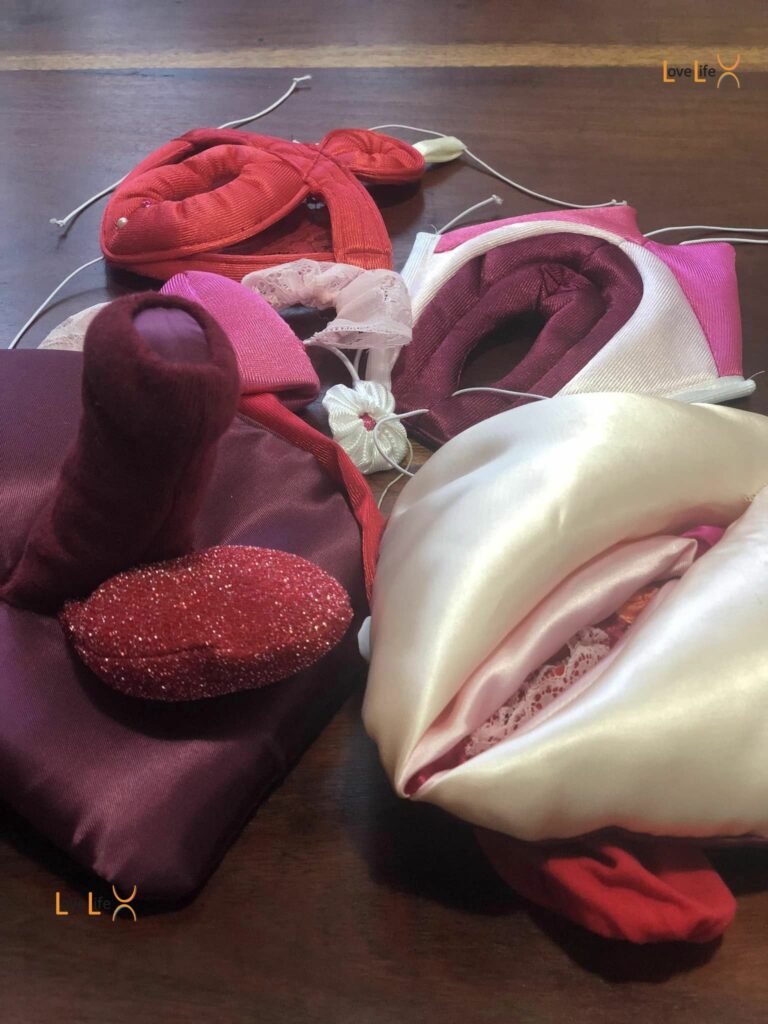
I nostri genitali didattici di produzione artigianale
A practical and concrete approach that fosters tangible and accessible learning.
Promotes self-awareness, helping participants better understand themselves, their emotions, potential, limits, and abilities.
Encourages action and experimentation with alternative behavioral patterns in a safe and controlled environment.
A flexible approach, adaptable to specific conditions, needs, and capacities.
Promotes social integration through group activities, supporting social engagement and the development of relational skills, while also allowing for personalized learning within the group dynamic.
By using diverse settings (outdoor or indoor activities, individual, pairs, or large groups) and various media (music, dance, painting, writing, theater), different learning styles are stimulated, promoting the development of multiple potentials and competencies.
Debate and discussion, including verbal, non-verbal, and paraverbal communication.
Behavioral modeling, i.e., learning through observing the behavior of others who serve as models.
Prompting, a support technique that provides the individual with one or more discriminative stimuli in the form of assistance (verbal cues, gestural guidance, or physical guidance) to elicit a response.
Role-playing and simulations, which allow users to immerse themselves in specific social situations and become active participants.
Token economy, a system in which the operator and the user agree that a specific correct behavior is followed by positive reinforcement.
- Integration with other expressive and psychoeducational disciplines, e.g., neuropsychomotor exercises, aimed at improving body awareness, coordination and balance, relaxation, timing (rhythm), and spatial organization, among other skills.
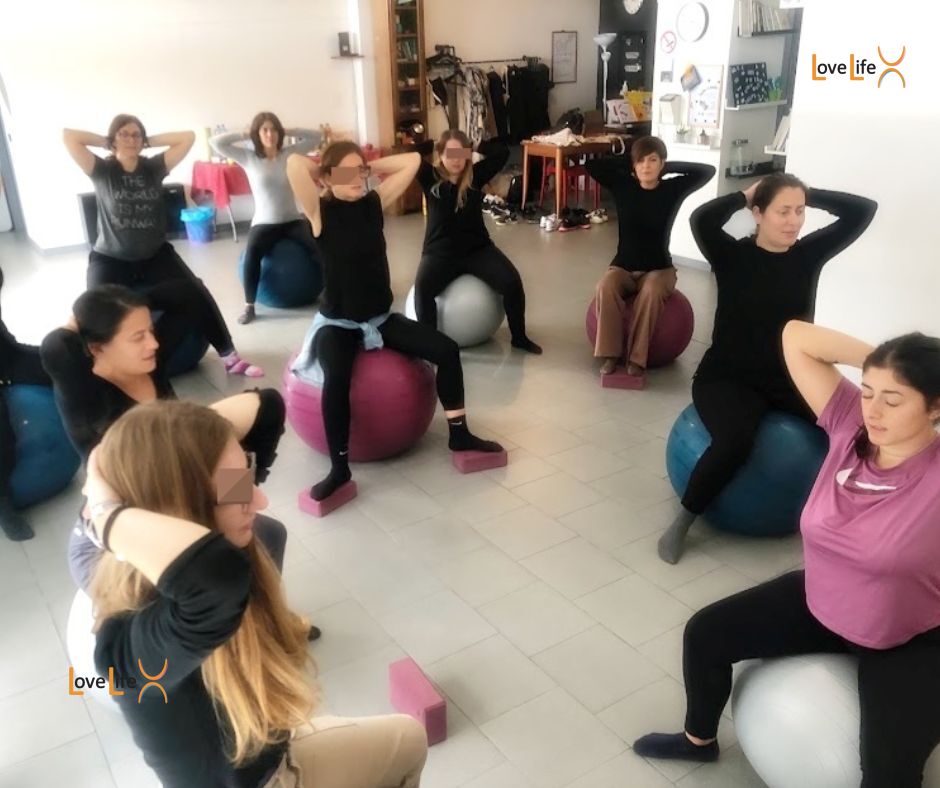
Sentire il proprio pavimento pelvico – Dolore Piacere – Perugia, 2023
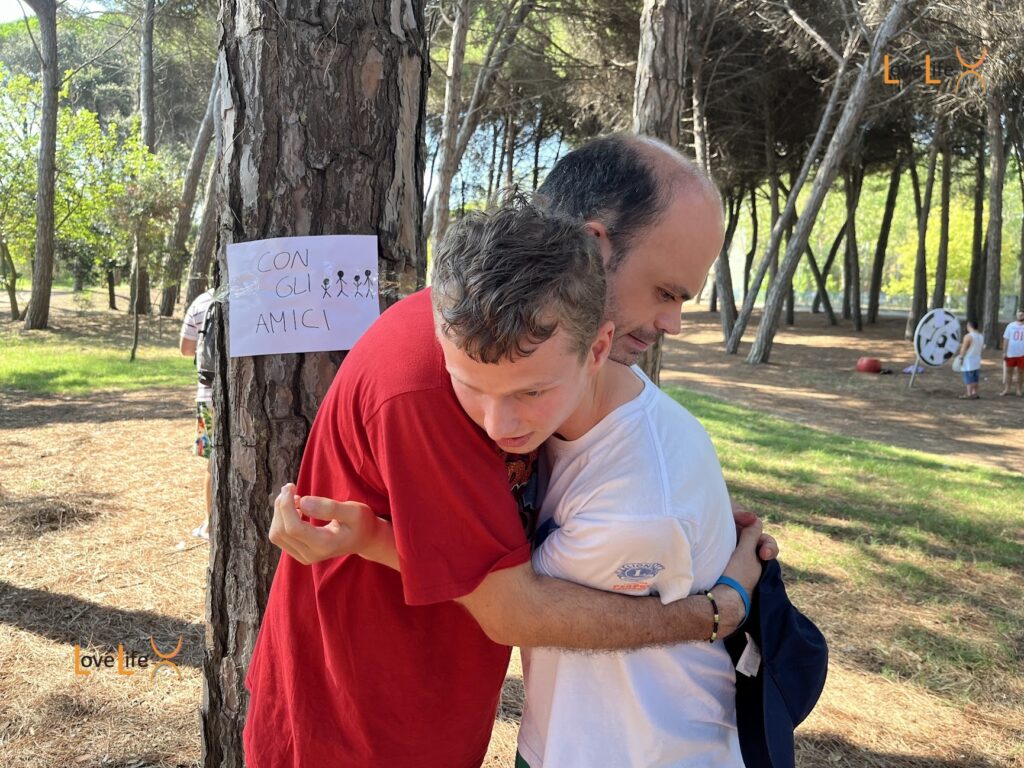
Laboratorio sugli abbracci – Loving Summer Camp – Cervia, 2024
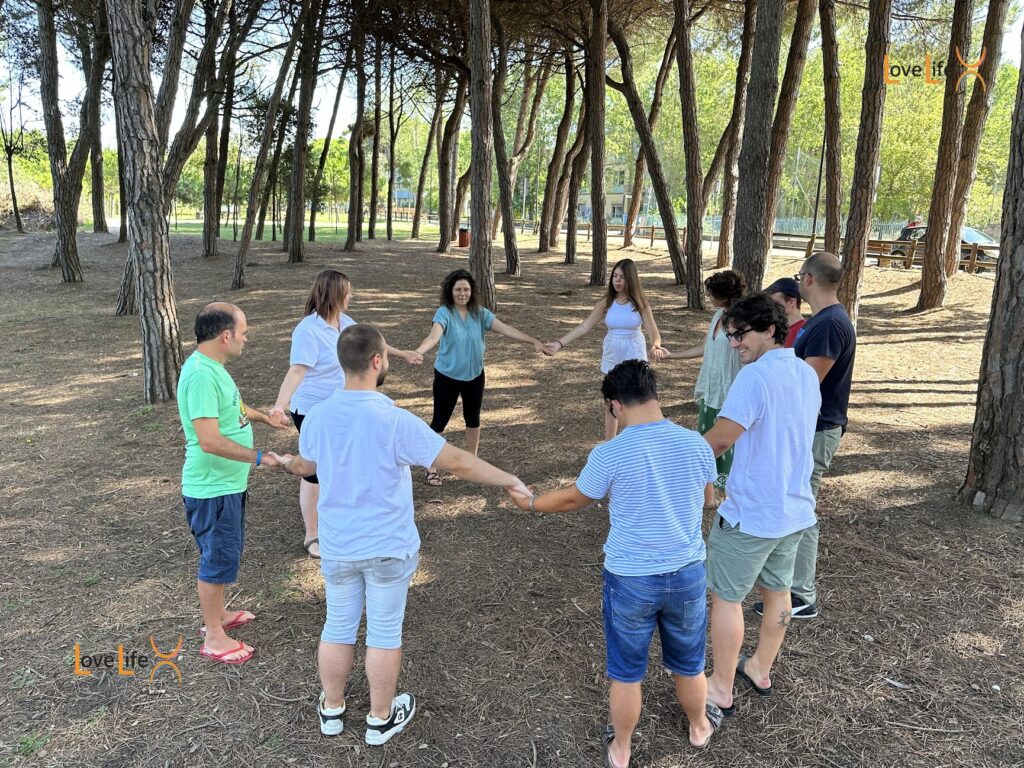
Noi siamo imperfettə, ma i nostri cerchi sì – Loving Summer Camp – Pinarella, 2023
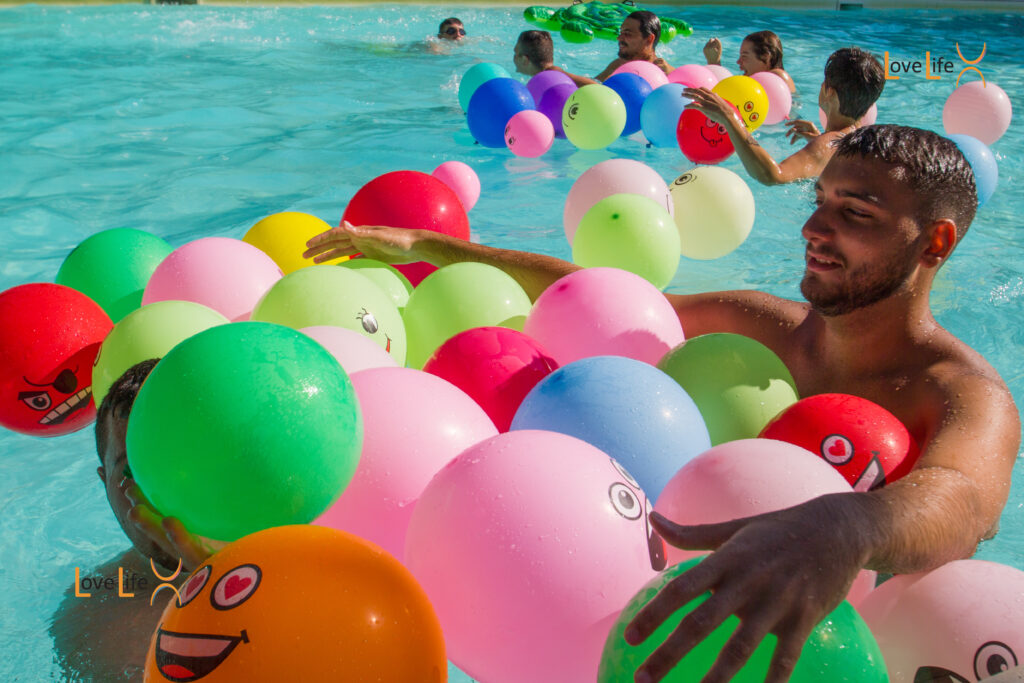
L’acchiappa emozioni – Loving Summer Camp – Cervia, 2024
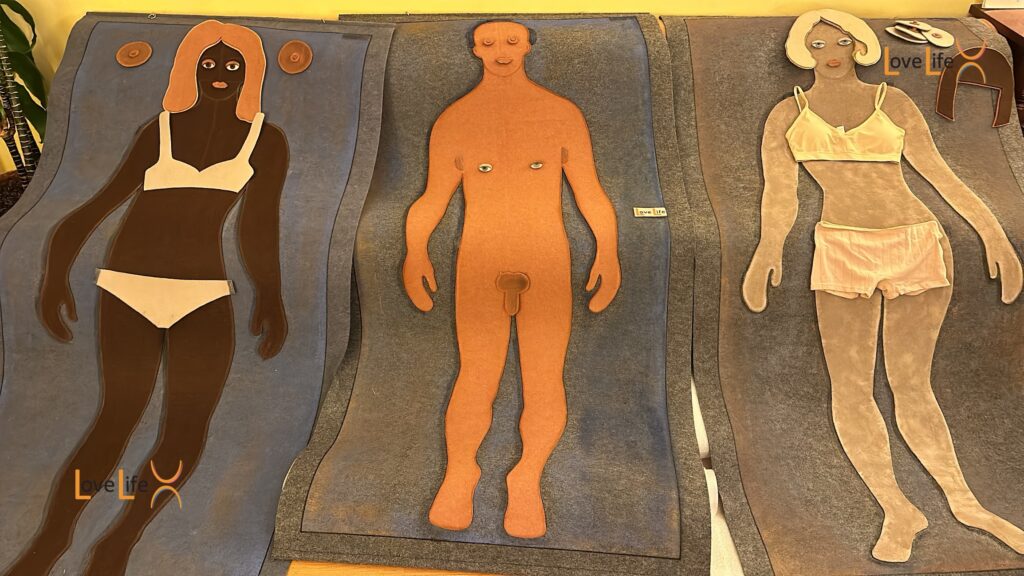
Sagome componibili per l’apprendimento corporeo – prodotte artigianalmente per noi